
As mentioned in our software roadmap, we’ve been working on many improvements to Pebble’s already pretty awesome SDK and developer environment.
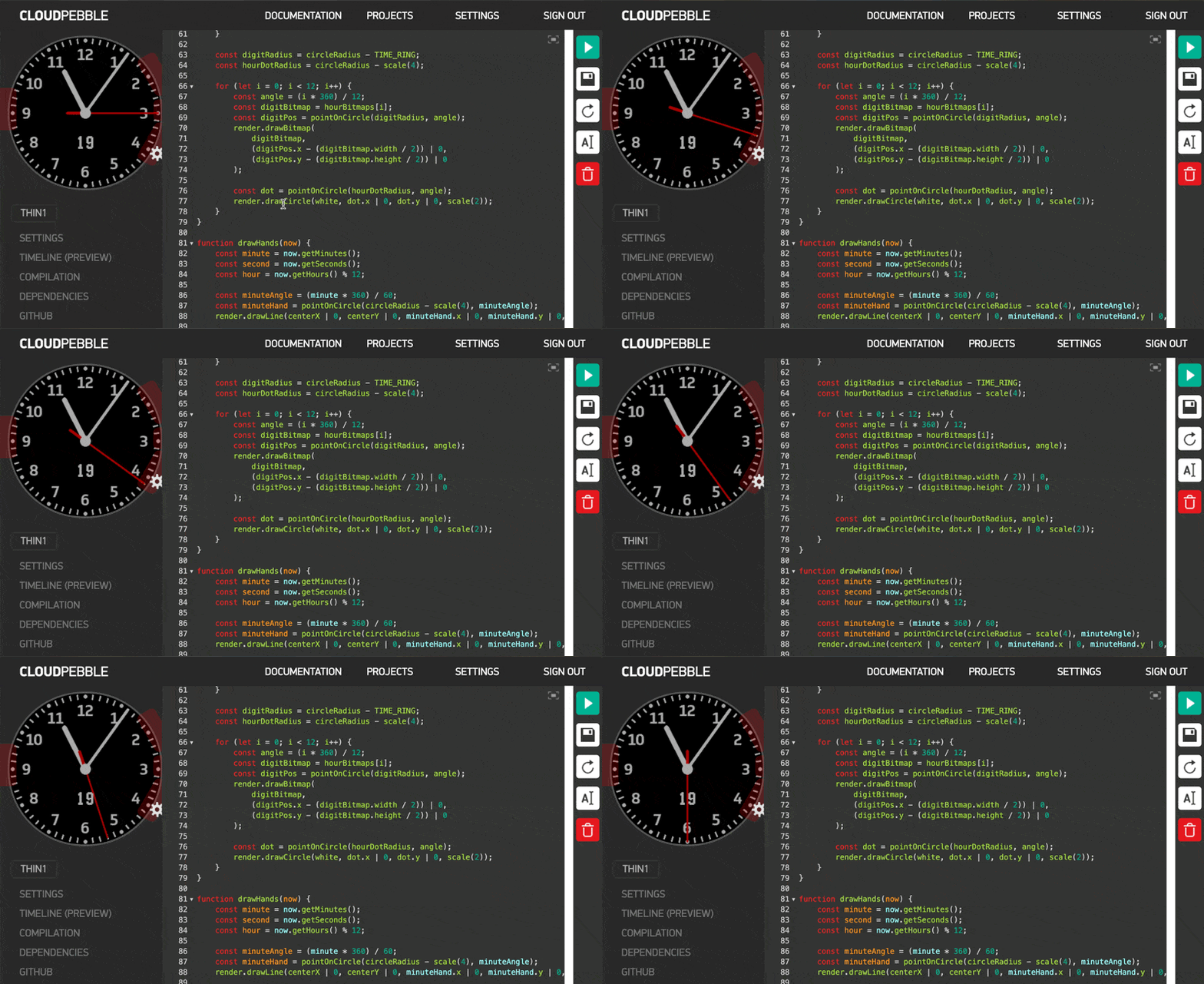
#CloudPebble Returns!
Fresh from several years in hibernation, CloudPebble is back! Everyone’s favourite way to write Pebble apps and faces in the browser with no downloads/setup needed is now on cloudpebble.repebble.com. Go give it a try right now!
Some notes:
- Most things work, but there will surely be some rough edges, please report any issues you spot
- Or better yet, fix the bugs or add new features yourself. It’s all open source!
- Syncing to Github, tab completion and JShint/linting is not working yet (PR welcome!)
- Unfortunately the original CloudPebble database got wiped a long time ago, you’ll need to re-import your projects
- Apps built using the new SDK still work on older Pebbles (aplite to diorite), but
flint(Pebble 2 Duo) require PebbleOS v4.9.127 (available now to sideload, will be pushed to everyone in a few days)
Thank you to Katharine Berry for creating CloudPebble!
#Round 2 support
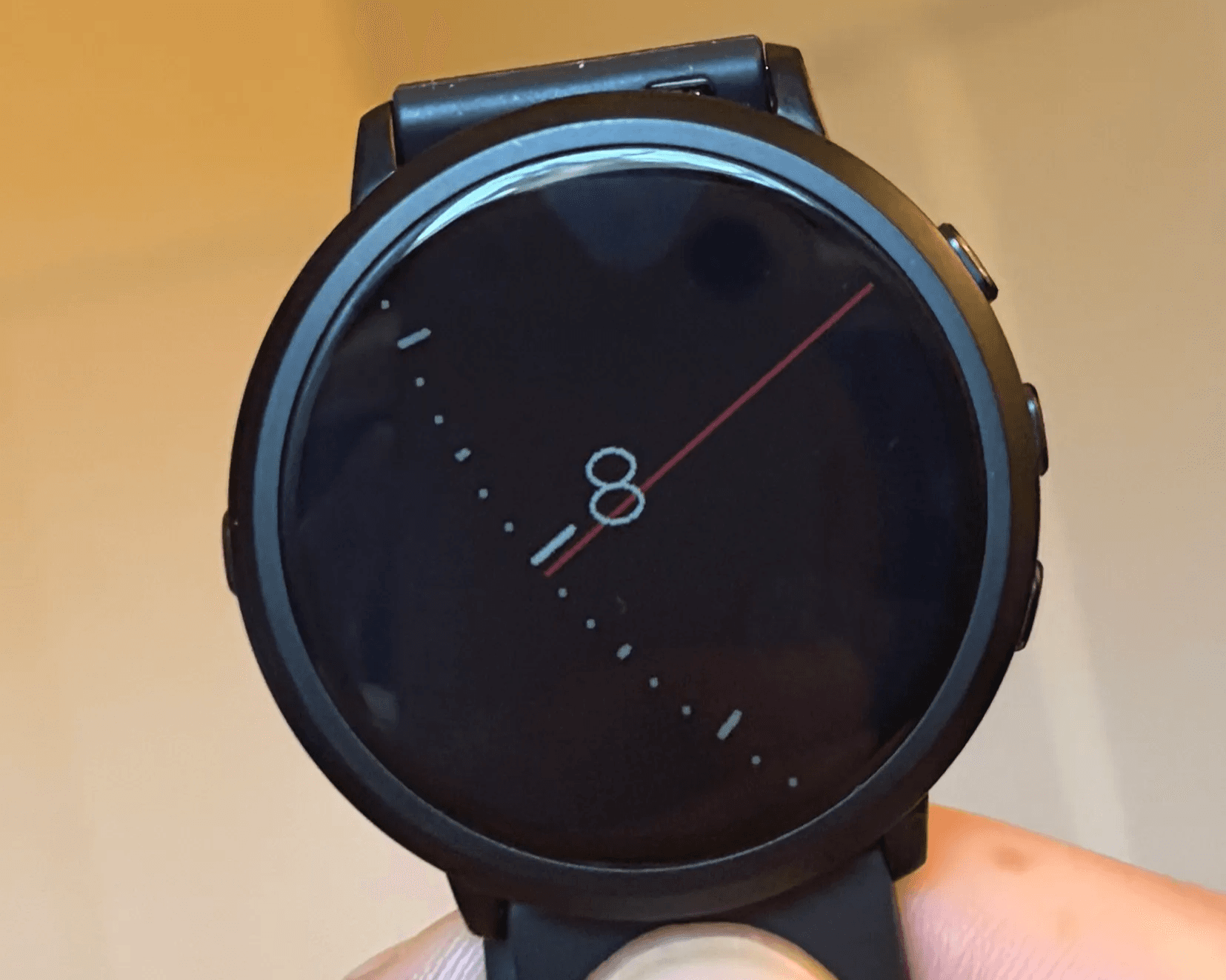
You can now build apps/faces for Pebble Round 2 and test them in the emulator. The new platform is called gabbro (formed from cooling liquid magma). The Round 2 display is 260x260 pixels, up from 180x180 on Pebble Time Round. Old PTR apps/faces automatically scale and work great on PR2 without any changes, but they will look even better if devs update them for the new display 😉 Download the latest SDK and use pebble install emulator --gabbro or try it out in CloudPebble.
Dive down memory lane and watch this 2015 Pebble Developer Retreat presentation on how to develop for round Pebble watches. Jump to this specific time to learn about Round-specific APIs or watch the full video:
#Now you can code Pebble apps in pure JavaScript
Since the dawn of time, developers could code apps and watchfaces for Pebble using C. Many people learned C just to write Pebble apps. There’s even a book!
Other options were available starting with Hui’s Pebble.js, where JS runs inside the Pebble mobile app and controls a fixed UI framework on the watch. Not to be confused with PebbleKit JS, which is also JS code running on the phone that provides data over wireless to apps running on the watch.
In 2016, we began to work on a JavaScript SDK called Rocky.js that enabled devs to write watchfaces in JavaScript that ran entirely on the microcontroller inside Pebble. It was never completed and was missing a lot of features, but showed a glimmer of a new world.
Fast-forward to 2025 - I was having lunch with my friend Peter in Palo Alto (the same friend who wrote a Doom demo for my first watch inPulse in 2011) who recommended I chat with his similarly named friend. Turns out the other Peter created Moddable, a popular JavaScript SDK for microcontrollers used in many consumer and industrial products. We hit it off and Moddable began porting their SDK to PebbleOS. It was not an easy lift, I really appreciate the time, effort and care that Peter and his team put into this project. Thank you so much, team Moddable!
Alloy - the new Pebble JavaScript SDK
We’re extremely pleased to announce Alloy, the new JavaScript SDK for Pebble powered by Moddable. Now you can write apps and watchfaces for Pebble entirely in JavaScript (or TypeScript!), with full support for standard, modern JavaScript (ES2025) - the same language used in web browsers and Node.js. These apps run natively on the watch, using Moddable’s XS engine which is now built into PebbleOS. Alloy’s JavaScript APIs are designed to be familiar to JavaScript developers - a blend of Web Standard APIs like fetch() and WebSocket(), standard ECMA-419 Embedded JavaScript APIs for sensors, storage, and, networking, and new APIs just for Pebble
It’s now in Developer Preview, here’s how you can try it out:
- On CloudPebble, or
- Download the latest Pebble sdk
uv tool install pebble-tool --python 3.13(full instructions). Then runpebble sdk install latest,pebble new-project --alloy my-app,pebble build,pebble install --emulator emeryand voila - your new JS Pebble app is up and running!
Documentation is still in progress, but please read our Alloy tutorial and check out the dozens of example JS example apps. Moddable also has full documentation available for their JavaScript engine and SDK.
A few notes:
- Both Emery and Gabbro platforms (Time 2 and Round 2) are already supported
- You can mix JS and C in the same app (more details and examples to come)
- Suggestions are welcome - please let us know which other Pebble capabilities should be exposed through JavaScript APIs
This is a preview, please set your expectations accordingly. Feedback and bug reports are extremely appreciated! Moddable also has a blog post with more details.
How to provide feedback
Please download the latest SDK and take it for a spin.
- If you have questions, feedback or suggestions on how we should improve the SDK, please create a post on the forum.
- If you need help writing an Alloy app, please post your code and problem to the forum.
- If you think you’ve found a bug or issue with the Alloy SDK or Pebble tool, please post a Github issue for the pebble-tool.
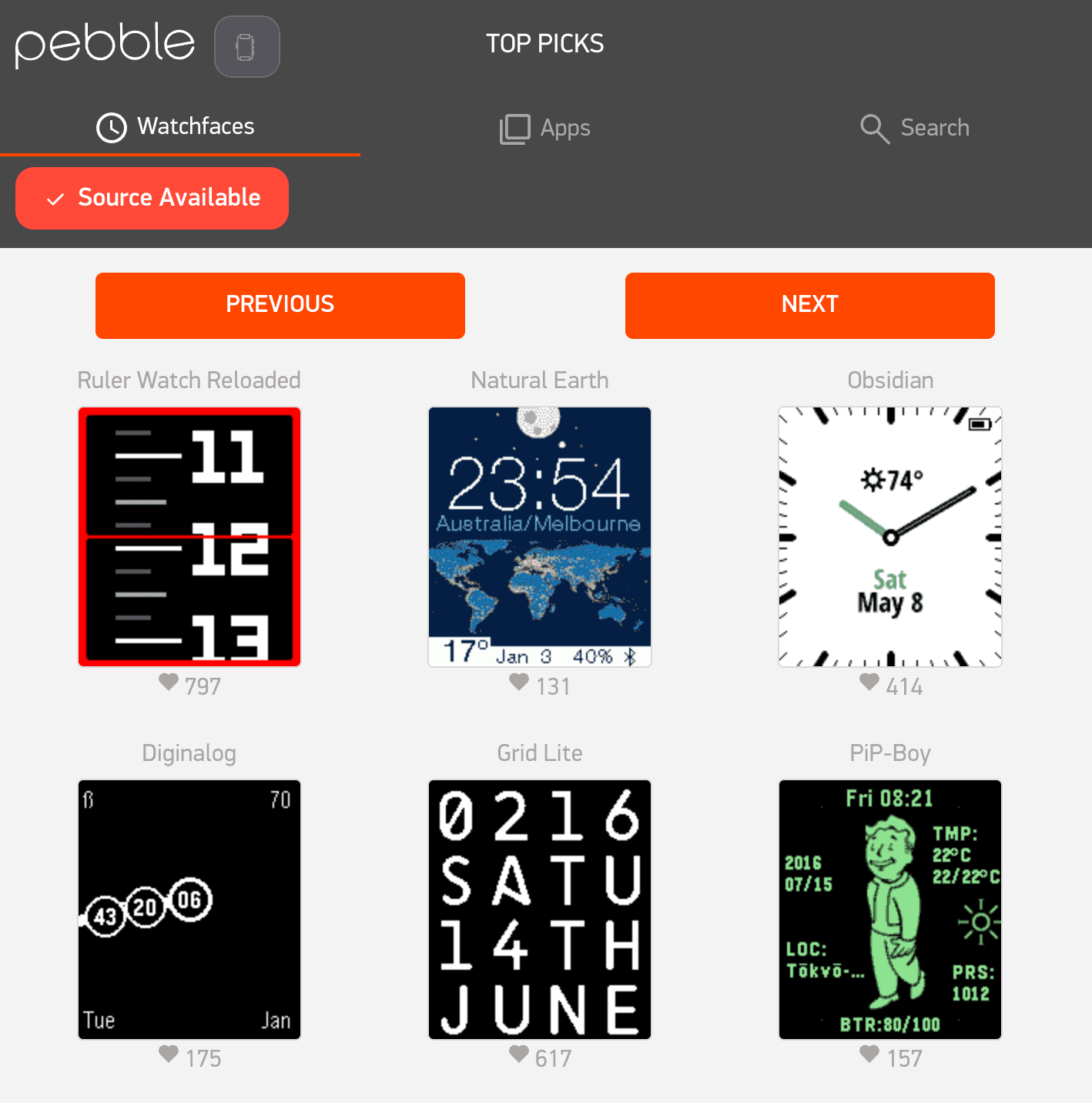
Need some inspiration? You can now filter the Pebble Appstore for open source apps at apps.repebble.com. Or check out the dozens of JavaScript examples.
#Much more SDK news to come in Part 2
Here’s the full changelog for Pebble SDK 4.9.127. We’re working on lots more developer/SDK related projects. Expect more news soon!